
MCS Certified
Microgeneration Certification Scheme
NAPIT Approved
Electrical Competency
RECC Member
Consumer Protection
ISO 45001
Health & Safety Management
ISO 9001
Quality Management
ISO 14001
Environmental Management
4.9 / 5
500+ verified reviews
Solar Panels for Distribution Centres
Distribution centres combine the largest commercial roofspaces in the UK with round-the-clock energy demand. The result is solar's most compelling financial case: vast generation capacity, near-total self-consumption, and payback periods that consistently beat every other commercial sector.
Get Free Survey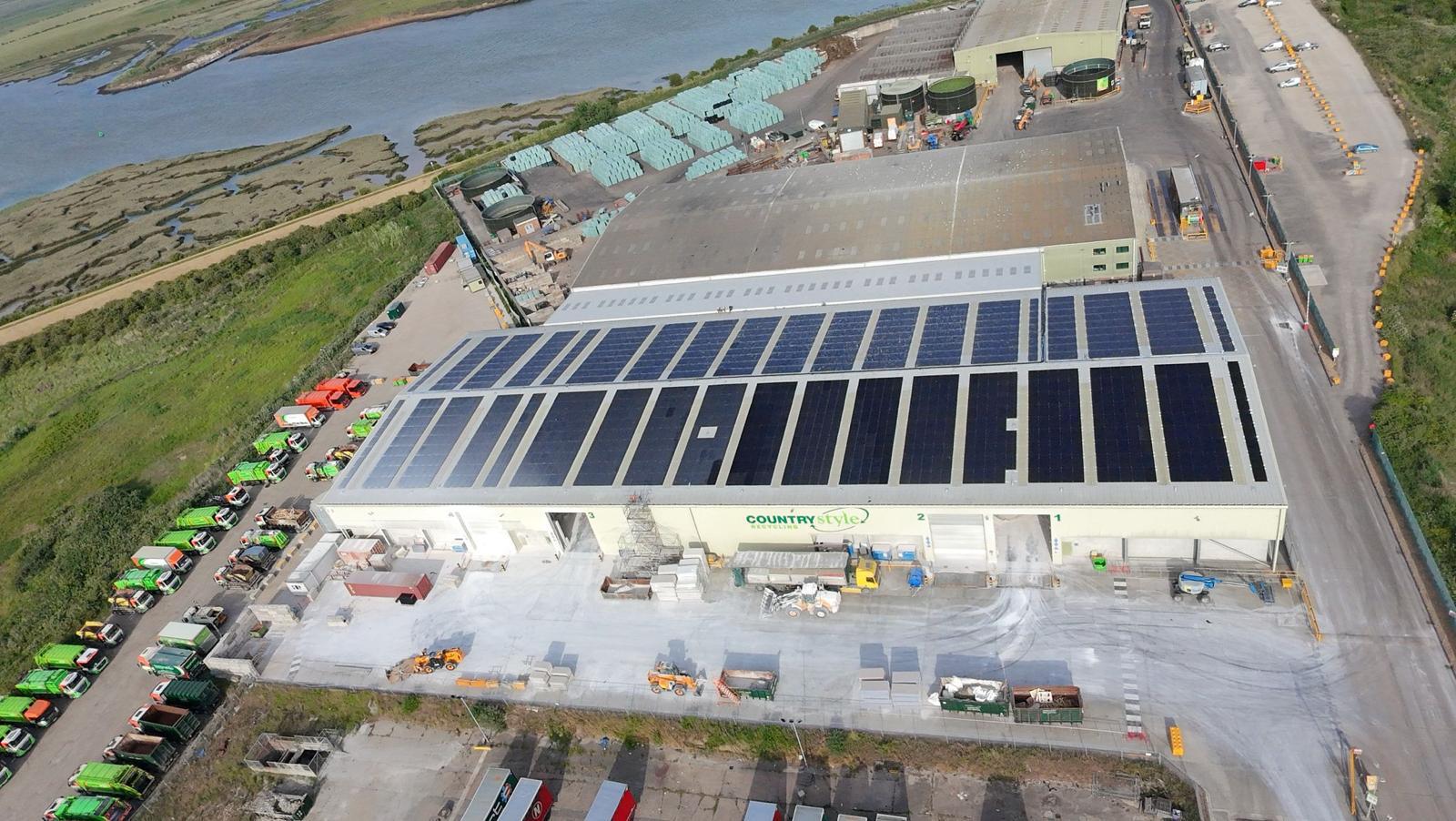
Why Solar Is the Standard for UK Distribution Centres
Distribution centres have emerged as the primary driver of commercial solar growth in the UK. The mathematics are straightforward: a 500,000 sq ft distribution centre consumes 3–5 million kWh of electricity annually — powering conveyors, sorters, refrigeration, lighting, and an increasingly large fleet of battery-powered equipment. That same building's roof accommodates 1–2 MW of solar panels. The alignment between roof scale and energy demand is near perfect.
The UK's major logistics parks reflect this reality. At DIRFT (Daventry International Rail Freight Terminal) near Northampton — the UK's largest rail-connected logistics park — new-build facilities from Prologis, Segro, and Gazeley specify solar as standard, with systems ranging from 500kW to 2MW+. Tesco's 840,000 sq ft DIRFT 3 facility and the M&S 1.3 million sq ft NDC under construction for 2029 both incorporate rooftop solar as a fundamental specification, not an afterthought.
At Magna Park in Milton Keynes, operated by GLP, over 5.7 million sq ft of distribution space is progressively adding solar capacity. PLP's newest developments at MK are designed from the structural specification stage to accommodate 100% PV coverage — an industry first that reflects how central solar has become to the distribution property sector.
In Suffolk, Freeport East's Gateway 14 development near Stowmarket requires all new buildings to incorporate solar PV as standard specification. Assan Panel's £45 million manufacturing and distribution facility at Gateway 14 committed to an extensive rooftop solar installation, and Bauder's new facility includes EV charging, LED lighting, and solar PV as core infrastructure.
The energy profile of modern distribution centres is particularly well-suited to solar. Automated handling systems, charging docks for electric forklifts and sorters, HVAC systems, and LED lighting all generate consistent daytime electricity demand that absorbs solar generation with self-consumption rates of 65–80%. Battery storage extends this to near-100% self-consumption on well-specified sites, effectively eliminating grid dependency during generation hours.
Carbon reporting requirements under Scope 1, 2, and 3 emissions frameworks have made rooftop solar mandatory from a corporate governance perspective for the major logistics operators. Amazon, DHL, XPO, and their peers now require solar as a minimum specification when signing new leases on distribution facilities. Landlords who do not offer solar-equipped buildings find their properties excluded from occupier shortlists entirely.
Typical System Specifications
Large-scale flat roof ballasted, 500kW–2MW+, combined with battery storage
| Size | Annual Generation | Estimated Savings | Payback |
|---|---|---|---|
| 500kW | 450,000 kWh/yr | £85,000-£130,000/yr | 3-5 years |
| 1MW | 900,000 kWh/yr | £170,000-£250,000/yr | 3-5 years |
| 2MW | 1,800,000 kWh/yr | £340,000-£500,000/yr | 3-5 years |
Financial Benefits
Distribution centre solar qualifies for 100% Annual Investment Allowance (up to £1M) and Full Expensing with no cap for companies, delivering a 25% effective cost reduction at the main Corporation Tax rate. The 10-year business rates exemption on new rooftop solar provides substantial ongoing savings on large-rated properties. For DIRFT and Thames Freeport sites, enhanced capital allowances apply within the tax site zones, further improving returns. At scale, distribution centre solar delivers some of the highest absolute pound-sterling returns in commercial property.
Distribution Centres Solar in Essex
Essex and the surrounding region contains the UK's highest concentration of distribution centre floor space outside the Midlands logistics triangle. London Gateway Logistics Park (9.25m sq ft, DP World) and Port of Tilbury (5m sq ft warehousing) anchor the Thames Estuary logistics corridor. The A13 belt from Thurrock to Basildon hosts Amazon's LCY2 in Tilbury — the UK's largest fulfilment centre at 2m sq ft. Milton Keynes' Magna Park (5.7m sq ft, GLP) and DIRFT near Northampton represent the Midlands opportunity, while Freeport East's Gateway 14 in Stowmarket anchors the Suffolk logistics cluster. All are active solar installation markets.
Key Benefit
Distribution centres offer the largest absolute solar generation capacity of any building type, and their 24/7 operational energy demand means self-consumption rates of 65–80% — maximising savings at full retail electricity rates.
Case Study
Featured Distribution Centres Solar Installation
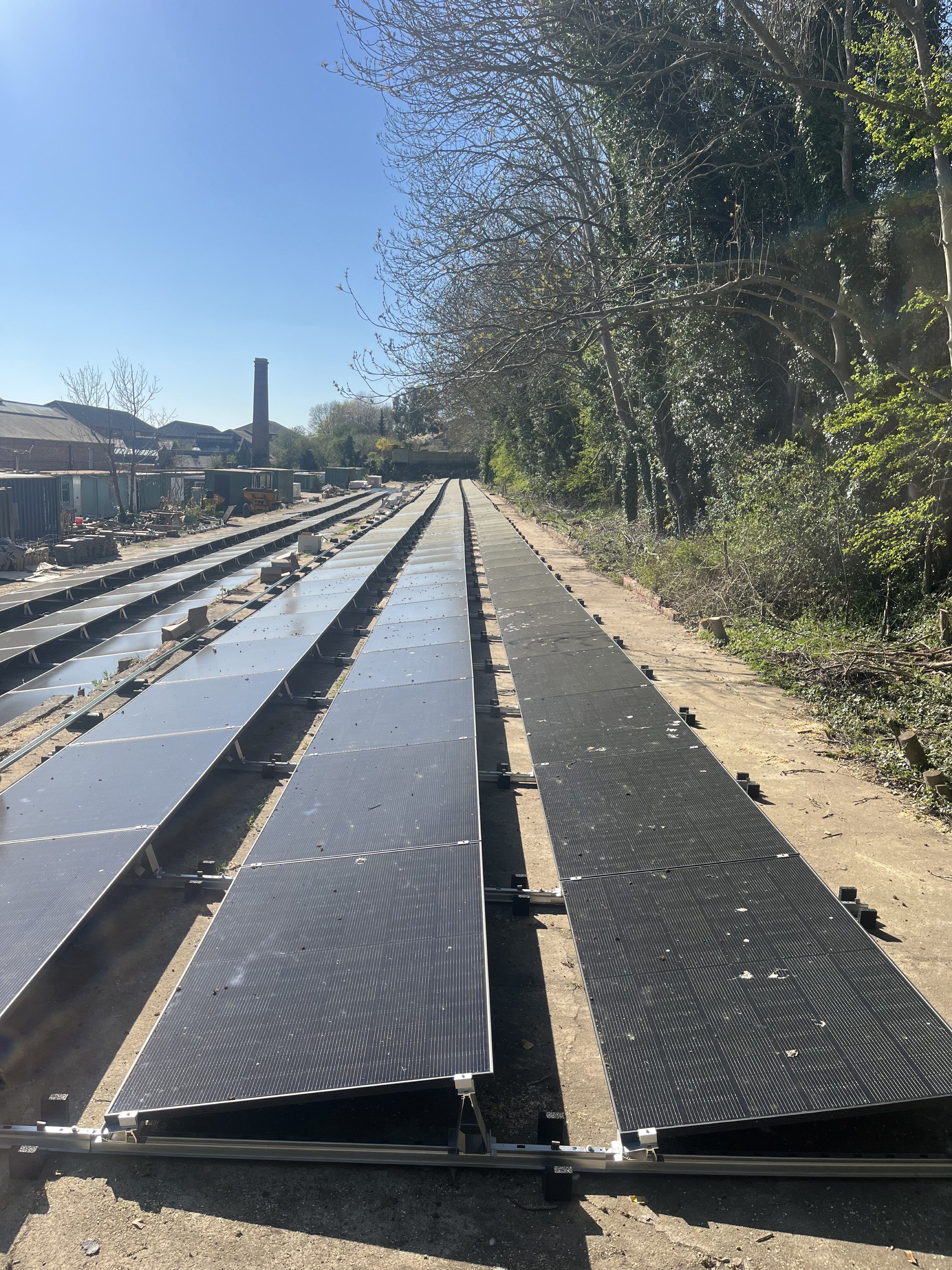
Case study details coming soon. We are documenting our latest distribution centres solar installation in Essex to share real-world performance data and ROI figures.
Request a ReferenceFrequently Asked Questions
A 100,000 sq ft distribution centre can typically accommodate 250–400kWp on its roof. A 500,000 sq ft facility can support 1.2–2MW+. Systems are sized to match the building's energy consumption profile — targeting 60–80% self-consumption for maximum savings. G99 grid connection applications are required for systems over 50kW, which we manage as part of our service.
Yes, with landlord consent. The majority of major logistics landlords — Prologis, Segro, GLP, CBRE IM, Tritax — actively support or require solar installation on their buildings. Power Purchase Agreements (PPAs) can structure the installation so the landlord or a third-party investor funds the system, with the occupier purchasing electricity at a discounted rate.
Any solar system over 50kW requires a G99 application to the Distribution Network Operator (UK Power Networks for Essex and East Anglia, Western Power Distribution/National Grid for the Midlands). The process typically takes 8–16 weeks for systems up to 1MW, longer for larger systems. We manage all G99 applications and liaise directly with the DNO on your behalf.
Battery-powered forklift fleets are ideal solar loads because charging typically occurs during and after peak generation hours. A solar + battery system can charge forklift batteries at 4–5p/kWh (solar generation cost) versus 25p+/kWh from the grid. For facilities running 100+ electric forklifts, this alone can justify a significant solar installation.
Most rooftop solar on distribution centres qualifies as permitted development under the Town and Country Planning (General Permitted Development) (England) Order, requiring no planning application. Ground-mounted systems and canopy structures typically require planning consent. We assess all planning requirements during the free site survey.
Solar for Distribution Centres Near You
Get a Free Solar Survey for Your Distribution Centre
Get a free, no-obligation site survey and quotation for your commercial property. Our MCS certified team will assess your building and provide a detailed proposal within 5 working days.
Prefer to speak to someone?
01279 295630