
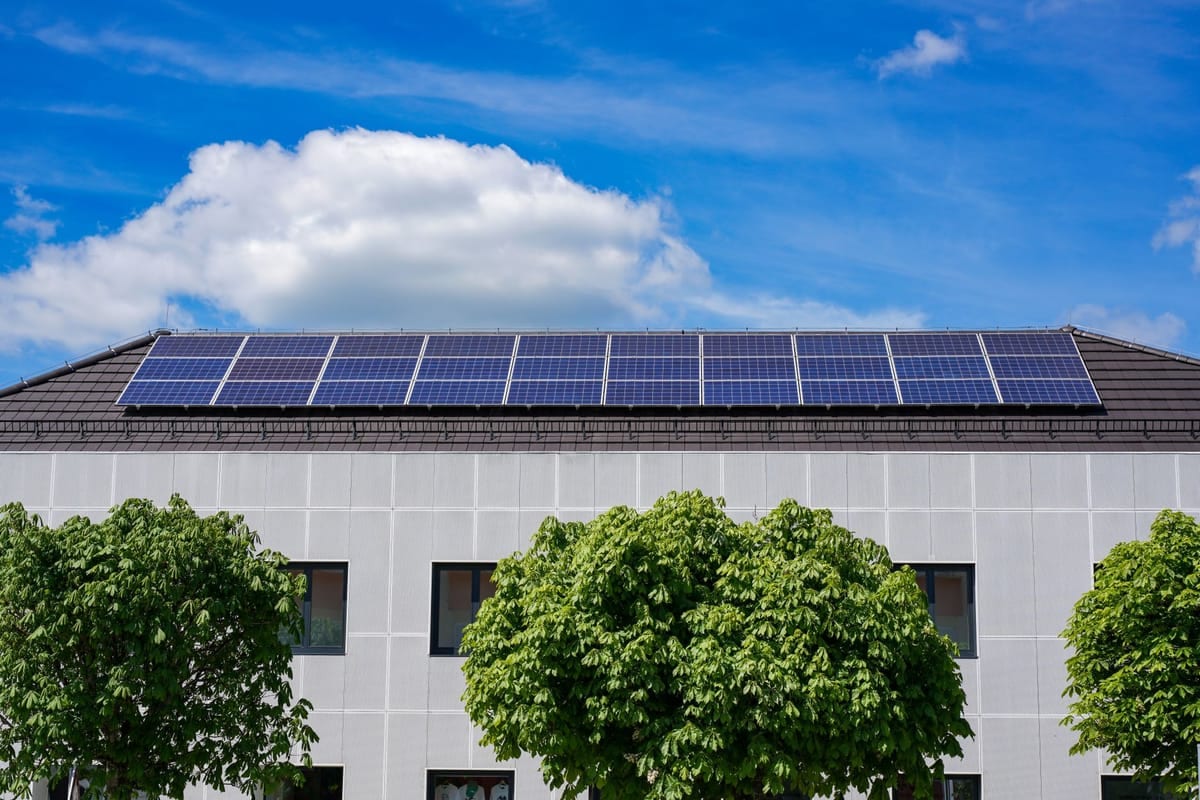
Commercial Solar in Southampton and Hampshire: The South Coast Business Guide
Hampshire is one of England's most commercially diverse counties — anchored by the Port of Southampton, the UK's busiest cruise and vehicle import port; the aerospace and defence corridor around Farnborough and Fareham; and a growing logistics and distribution market along the M3 and M27. For South Coast businesses, the combination of excellent solar irradiation and Solent Freeport incentives makes commercial solar an exceptionally strong financial proposition.
Key Figures: Hampshire Commercial Solar
1,580kWh/m²/yr
Solar irradiation (Southampton)
1,800+hrs/yr
Sunshine hours
3–5yr
Typical payback
SolentFreeport
Enhanced allowances available
Why Hampshire Is One of the UK's Best Solar Markets
The south coast of England enjoys the UK's highest sunshine hours per year, and Hampshire is no exception. Southampton averages over 1,800 sunshine hours annually — comparable to northern France and significantly higher than the Midlands or northern England. This translates directly into more electricity generated per panel installed, improving the ROI of every commercial solar investment in the region.
Hampshire's commercial economy is anchored by sectors with particularly strong solar economics. The Port of Southampton handles over 2 million passenger movements, 800,000 vehicle imports, and significant container traffic — all supported by energy-intensive port operations. The aerospace and defence cluster around Farnborough, Fareham, and the Portsmouth Naval Base brings high-energy manufacturing and research facilities. And the M3 logistics corridor between Basingstoke and Winchester hosts a growing cluster of distribution centres serving the south of England.
The Port of Southampton: Logistics Solar at Scale
The Port of Southampton is the UK's largest vehicle handling port and second largest container port by value. ABP's operations at Southampton handle Jaguar Land Rover, Ford, Honda, and numerous European brands — creating enormous storage, processing, and logistics energy demand across the Eastern and Western Docks.
ABP has published a net zero target of 2040 with interim targets requiring significant renewable energy deployment. Rooftop solar on port warehousing, vehicle processing buildings, and logistics facilities represents the most accessible and cost-effective route to meeting these targets. UK Power Networks Eastern region serves the port and surrounding commercial areas; National Grid manages the higher-voltage connections for the largest industrial consumers.
The Solent Freeport designation covering the Port of Southampton and Port of Portsmouth brings Enhanced Capital Allowances for businesses within the tax sites — allowing 100% first-year tax relief on solar panels, battery storage, and EV charging infrastructure on top of the standard Annual Investment Allowance available to all UK businesses.
Aerospace and Defence: High-Energy Manufacturing Goes Solar
Hampshire's aerospace cluster — centred on Farnborough, Fareham, Gosport, and the BAE Systems operations at Brough and Portsmouth — represents some of the UK's most energy-intensive manufacturing facilities. Clean room environments, precision machining, composites manufacturing, and test facilities all demand reliable, consistent power.
Defence contractors operating under government contracts are increasingly required to demonstrate progress against Scope 2 emissions targets. The Ministry of Defence's Climate Change and Sustainability Strategy commits to net zero defence by 2050, with interim targets that require installation and defence supply chain companies to reduce their operational carbon footprint. On-site solar generation is the most direct way to reduce Scope 2 emissions for manufacturing operations.
A typical 100,000 sq ft aerospace manufacturing or test facility in Hampshire can support a 400–600kW solar system, generating 440,000–660,000 kWh annually. With high daytime consumption from machinery and HVAC, self-consumption rates of 70–80% are typical — delivering annual savings of £74,000–£132,000.
Basingstoke and the M3 Logistics Corridor
Basingstoke is one of the South's major logistics and distribution hubs, with large-scale parks at Houndmills, Chineham, and the growing South Hampshire Logistics Park development. The M3 corridor linking London with Southampton has become one of the most active logistics development zones in England, with new speculative distribution units being developed at pace to meet e-commerce demand.
For new-build logistics units in Hampshire, solar is increasingly being specified by developers as standard, driven by BREEAM requirements, tenant sustainability demands, and the straightforward financial case. For existing logistics stock — much of which was built before solar was viable at commercial scale — retrofitting panels now delivers payback within the 4–5 year range that most occupier companies require.
Recommended Solar Installer: Solent Solar
For commercial solar installations across Southampton, Portsmouth, Basingstoke, Fareham, Eastleigh, and the wider Hampshire market, we recommend Solent Solar as our trusted regional partner. With established experience across the South Coast commercial property market — including port logistics, aerospace facilities, and M3 corridor distribution centres — Solent Solar brings the local expertise and installer relationships needed to deliver high-quality commercial solar projects efficiently.
Their familiarity with the Solent Freeport planning processes and the National Grid South East connection environment means that projects in and around the Port of Southampton proceed with minimal delays.
Frequently Asked Questions
Southampton and the wider Hampshire coast is one of the UK's sunniest commercial regions. The south coast receives approximately 1,550–1,600 kWh/m² of solar irradiation per year — among the highest in England. Southampton averages over 1,800 sunshine hours annually. A 100kW commercial solar system in Southampton typically generates 100,000–110,000 kWh per year, delivering annual savings of £24,000–£30,800 at current commercial electricity rates — broadly 10–15% more generation than equivalent systems installed in the Midlands or North.
The Solent Freeport designation — which covers the Port of Southampton, the Port of Portsmouth, and Fareham — brings Enhanced Capital Allowances for qualifying plant and machinery investments within designated tax sites. Solar panels, battery storage, and EV chargers all qualify as plant and machinery. Businesses in the Solent Freeport tax sites can claim 100% first-year relief on these investments in addition to any standard Annual Investment Allowance entitlement. The freeport designation also includes simplified planning processes that can accelerate solar installation timelines.
Most rooftop commercial solar in Hampshire qualifies as permitted development. Hampshire County Council and the constituent district councils including Southampton City Council, Portsmouth City Council, and Basingstoke and Deane Borough Council all have climate action plans that support renewable energy. Exceptions apply in the South Downs National Park, New Forest National Park, and designated conservation areas in historic Winchester, Romsey, and parts of Southampton's waterfront. For standard industrial and logistics properties along the M3, M27, and A27 corridors, planning is generally unproblematic.
Port logistics operations — cold stores, bonded warehouses, container handling facilities, and distribution centres — are among the highest-returning solar candidates nationally. Southampton port businesses typically achieve self-consumption rates of 65–75% due to continuous daytime operations. A 200,000 sq ft logistics building at the Port of Southampton can support a 500kW solar system, generating approximately 500,000 kWh annually. At 70% self-consumption, this delivers savings of approximately £84,000 per year — giving a payback of around 4 years after the Annual Investment Allowance.
For commercial solar across Southampton, Portsmouth, Basingstoke, Fareham, and the wider Hampshire market, we recommend Solent Solar (solent-solar.com) as our trusted regional partner. Solent Solar has established experience across the South Coast commercial market, including port logistics, aerospace, and retail property. They are well-versed in the Solent Freeport planning and grid connection environment, working with National Grid's South East distribution network.