
Civils & Groundworks for Commercial Solar Projects
On most commercial solar projects, the panels are the straightforward part. What decides whether a project happens at all — and whether it finishes on time — is the ground beneath it: the clearance, the foundations, the trenching and the reinstatement that never appear in the finished-system photos. We do that work in-house, alongside the install.
Get Free Survey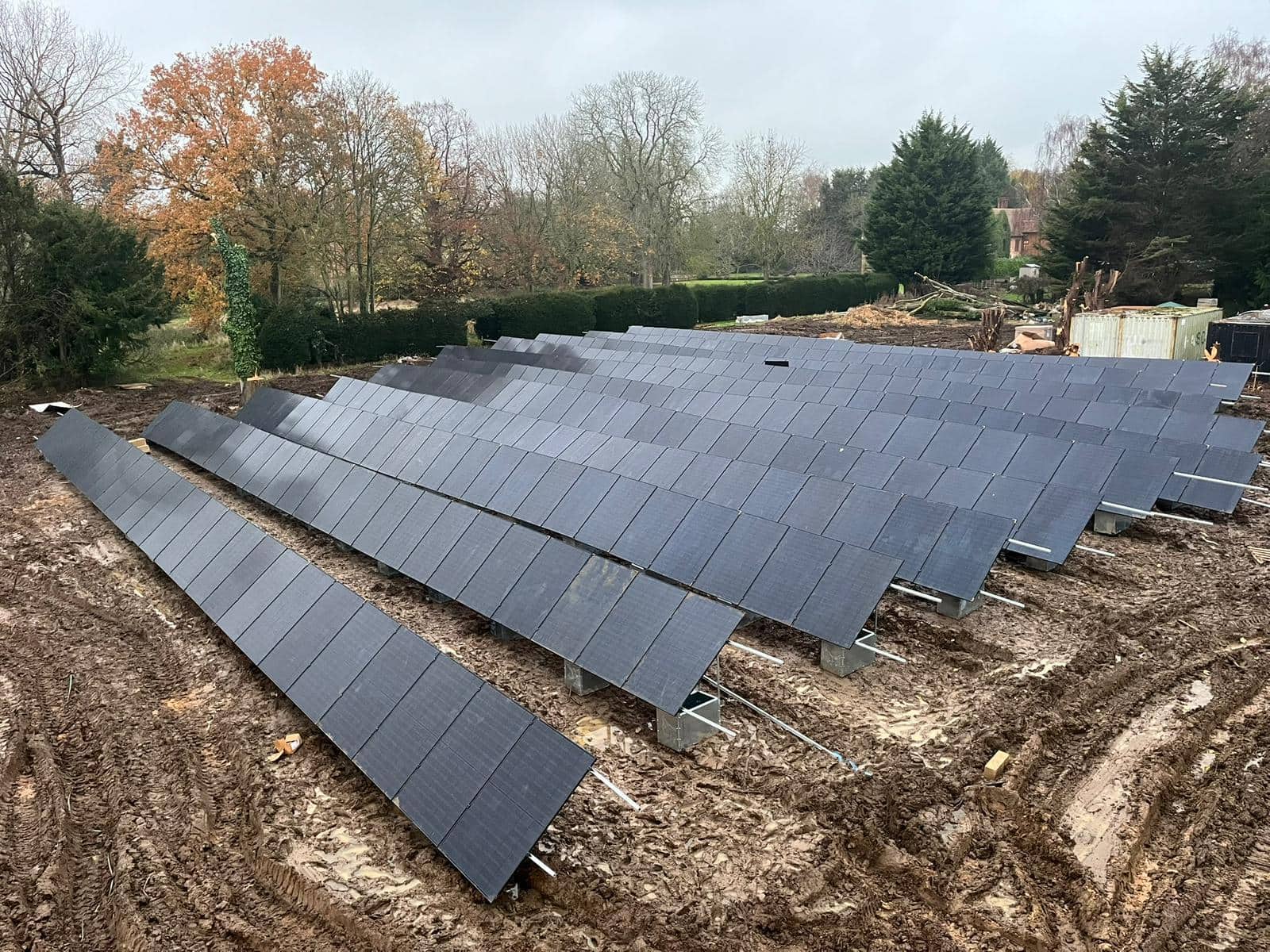
6 weeks
Site clearance & enabling works at Woodhall Manor
~300m
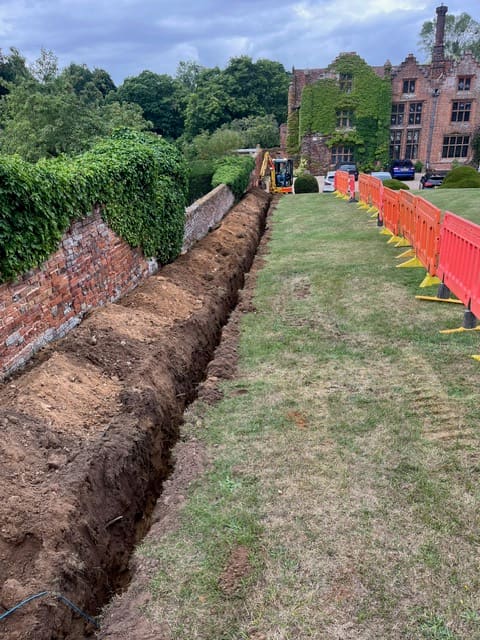
New underground cable routes at Seckford Hall
500 panels
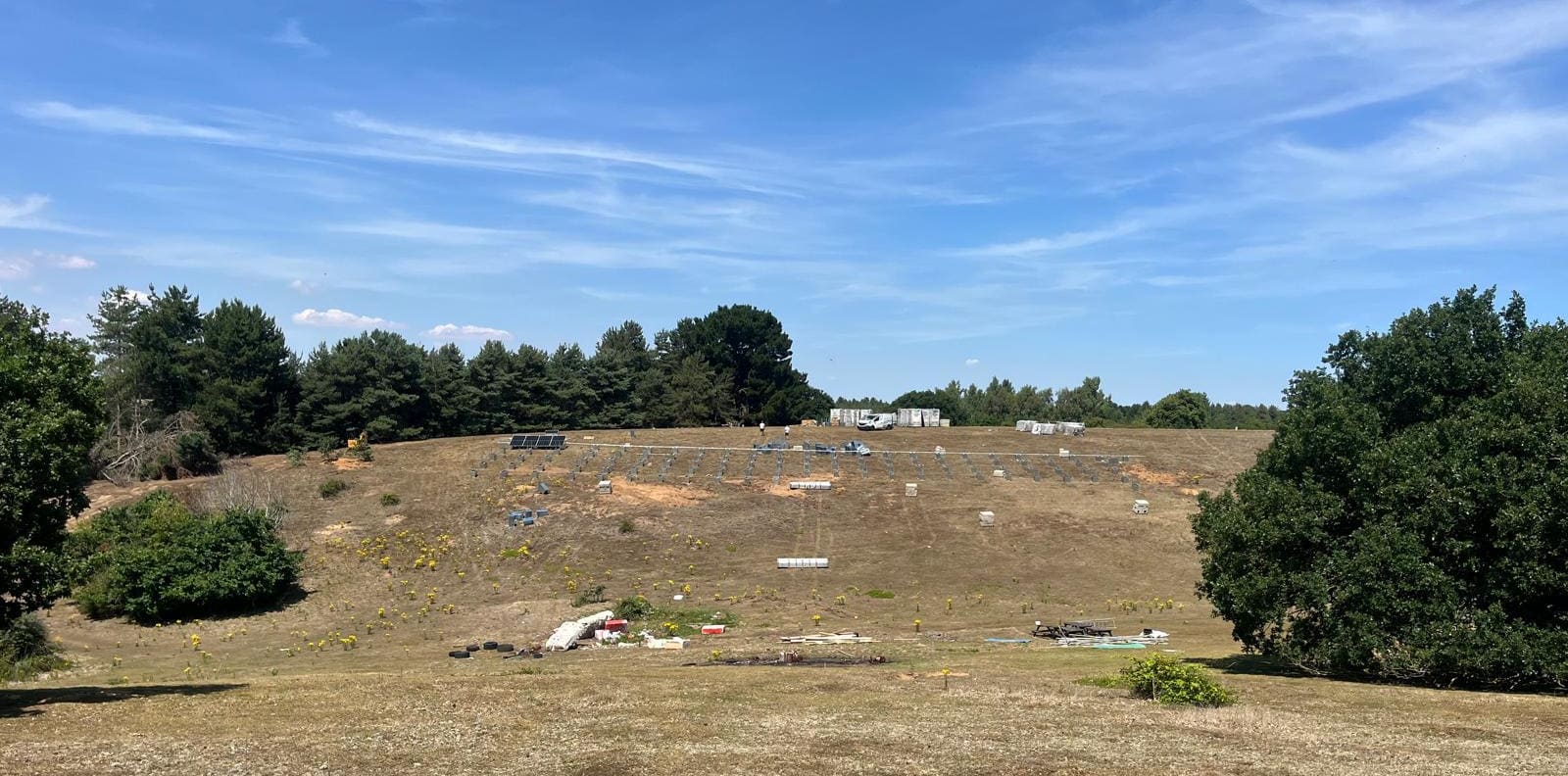
Mounted on uneven ground, no earthworks, at The Old Depot
9 x 60ft
Mature conifers removed to unlock the Woodhall Manor site
Civils Is a Discipline in Its Own Right — Run in Parallel With the Install
Civil engineering and groundworks are all the ground-level construction that surrounds the electrical installation — the clearance, earthworks, foundations, cable routes and reinstatement that create the platform a solar system is built on and connected through. On a commercial project the civils and the electrical work run in parallel: they are a distinct discipline from the panel and inverter work, which is exactly why we run them as a separate service line.
EC Eco Energy delivers the civils and groundworks that make commercial solar, battery storage and EV charging installations possible. Because the same team designs the energy system and plans the enabling works, the groundworks are engineered around the array layout, cable routes and connection points from day one — not handed to a third party who has never seen the design. We deliver this work on live business premises, historic estates and planning-sensitive sites across Essex, Suffolk, Northamptonshire and the wider UK, and we work to the CDM 2015 Construction (Design and Management) Regulations throughout.
What Our Civils & Groundworks Cover
From the first tree cleared to the last strip of turf relaid, here is the full scope we deliver on a commercial solar project — each capability proven on a real EC Eco Energy site.
Site clearance & enabling works
Some of the best land for ground-mounted solar is the worst-maintained corner of a site: vegetation, self-set trees, waste soil, redundant structures and obstacles that have to go before design can even begin. Our teams handle tree and vegetation clearance, debris and waste-soil removal, demolition of redundant buildings and general obstacle removal to leave a workable platform.
Earthworks & grading
Where levelling is allowed, we cut and fill to create a stable, well-drained platform for the array. Where it is not — on planning-sensitive or protected land — we take the opposite approach and design the mounting to the natural contours of the ground rather than reshaping it.
Access roads & hardstanding
Heavy plant, deliveries and craneage need somewhere to run and stand. We install permeable stone tracks and hardstanding for site access, plus laydown and assembly areas — and, where temporary access simply cannot be built, we adapt the method of work instead.
Array foundations
The mounting foundation is chosen from a geotechnical survey, not assumed. Depending on the ground we use driven steel piles, ground or helical screws, ballasted (non-penetrating) systems or concrete piers — the full range is set out in the foundation table below.
Plant pads, plinths & bases
Inverters, battery/BESS units, switchgear and control equipment need level, load-rated bases. We form reinforced-concrete pads and plinths, container and plant-room bases and cable-entry provisions so the electrical plant sits safely and stays serviceable for the life of the system.
Cable trenching & ducting
Ground-mounted arrays rarely sit next to the building they power, so the cable route is engineered as carefully as the panels — segregated DC, AC, comms and earth runs, ducted and protected, at the correct depth, then reinstated. Full specification below.
Grid-connection civils
Connecting a commercial array means coordinating the DNO / G99 connection and building the civils it needs — transformer, switchgear and metering bases and the associated ducting and cable routes. We plan this alongside the DNO process so the connection point, cable route and array layout all line up from day one.
Reinstatement & environment
Groundworks on a working business or hospitality estate have to leave no trace. We store and reinstate topsoil and turf, protect and where necessary reroute field drains, retain hedgerows and manage trees. Ground-mount systems are reversible — the land can return to its previous use at the end of the array's working life.
Ancillary works
The finishing groundworks that make a site safe and serviceable: surface-water and site drainage, security fencing, gates and bases for CCTV, and plant-room ventilation or extraction where equipment runs hot.
Ground-Mount Foundations: We Survey First, Then Choose
There is no default foundation for a ground-mounted array. The right choice is set by the ground itself, so we start with a geotechnical survey of the soil and site conditions and select the foundation the ground allows — never the other way round. These are the four systems we work with.
| Foundation type | Best for | Notes |
|---|---|---|
| Driven steel piles Galvanised I-beam or C-channel driven directly into the ground. | Larger arrays on good, cohesive soil | Fast, minimal spoil; needs adequate pull-out strength and limited refusal. |
| Ground / helical screws Threaded or helical screw anchors wound into the ground. | Rocky or high-refusal ground | Removable with minimal spoil; the helix resists uplift and wind loading. |
| Ballasted / concrete Non-penetrating precast or poured ballast blocks. | Ground that cannot be penetrated, and flat roofs | No penetrations — ideal for contaminated ground, made ground or flat commercial roofs. |
| Concrete piers Cast-in-place reinforced concrete foundations. | High point loads | Highest load capacity; more excavation than piles or screws. |
On the Rainham flat roof we used a ballasted, non-penetrating system so the roof was never pierced; at The Old Depot the foundations were designed to follow uneven ground where levelling was not permitted. Explore ground-mount options for farms and rural land and hotels and venues.
Cable Trenching & Ducting, Done to Spec
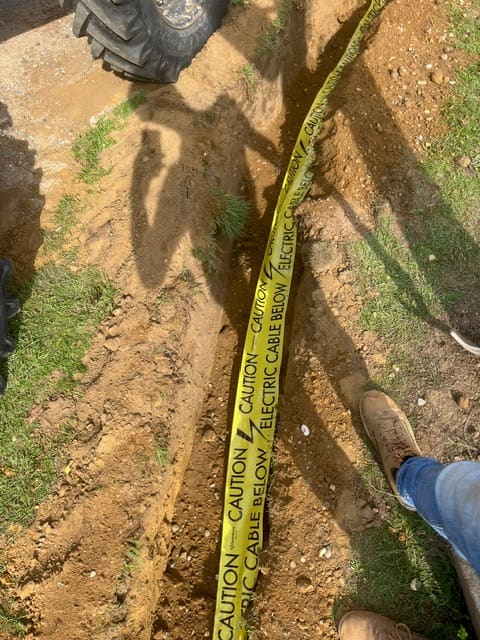
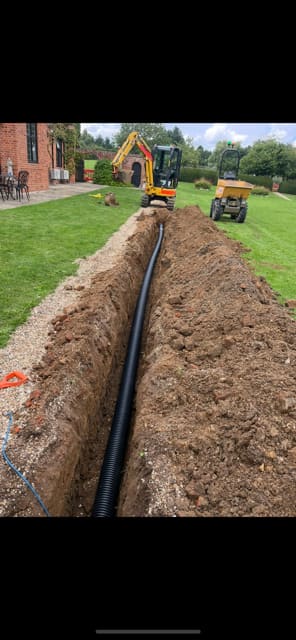
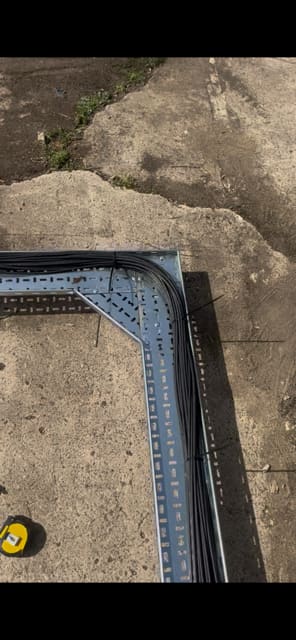
Ground-mounted arrays rarely sit next to the building they power, so the cable route is engineered as carefully as the panels themselves. We segregate the DC, AC, comms and earth runs, pull them through duct with a draw rope for future access, and lay marker and warning tape above the cables so anyone digging later knows what is beneath them.
Trenches are excavated to a minimum of 600mm to the top of the cable, backfilled and compacted, with reinstatement built into the plan from the outset. At Seckford Hall Hotel & Spa, the array was positioned around 300 metres from the buildings to keep it hidden from key viewpoints — which meant roughly 300m of new underground cable routes through mixed and sandy soils that made trenching considerably more demanding than a typical installation. Every section of turf lifted for the trench was retained and relaid, leaving virtually no visible evidence of the cabling beneath the surface.
On EV charging projects, cable-ducting groundworks are completed with minimal disruption to your car park operations.
Why EC Eco Energy: One Contractor for the Ground and the System
Most solar installers stop at the electrical work and sub the groundworks out — or decline the job when a site needs serious civils first. That split is where projects stall: an unusable site means no project; a cable route that cannot cross the estate means a ground array cannot connect; poor reinstatement can cost a hospitality venue more in appearance than the system saves in electricity.
EC Eco Energy does both. The same team designs the solar, battery and EV system and delivers the civils that support it — including the difficult, planning-constrained and enabling-works-heavy sites other installers turn down. One contractor means one point of responsibility, groundworks engineered around the actual design, and no gap between two firms where accountability usually gets lost.
Handled properly, the civils phase is what unlocks the result. Woodhall Manor's enabling works turned land with no practical use into an asset that cut kitchen and operations electricity costs by around 85%. Seckford Hall's trenching and reinstatement delivered a 300kWp system saving around £120,000 a year with no visual impact on a listed estate. The Old Depot's contour-following foundations produced a system that cut bills by 75% — around £144,000 a year — without removing a single tree.
We are MCS certified and hold NAPIT, RECC, TrustMark and NICEIC accreditation for our solar and electrical work, and we carry that same standard of certification, safety management and compliance onto the groundworks — see our accreditations in full.
Proven results
~85%
kitchen & operations electricity cut, Woodhall Manor
~£120,000/yr
saved on a 300kWp system, Seckford Hall (listed estate)
75% / ~£144,000/yr
bills cut with no trees removed, The Old Depot
Proven on Real Sites
Every capability on this page comes from a project we have actually delivered — clearance, estate trenching, no-earthworks ground-mounts and high-rise logistics. Read the full write-ups.
Woodhall Manor, Suffolk
Six weeks of clearance and enabling works, then a 172kWp ground-mount array and 60kW battery built through two feet of standing mud.
Read Case Study Seckford Hall Hotel & Spa, Suffolk
Around 300m of new underground cable routes through mixed and sandy soils, with every section of turf retained and reinstated.
Read Case Study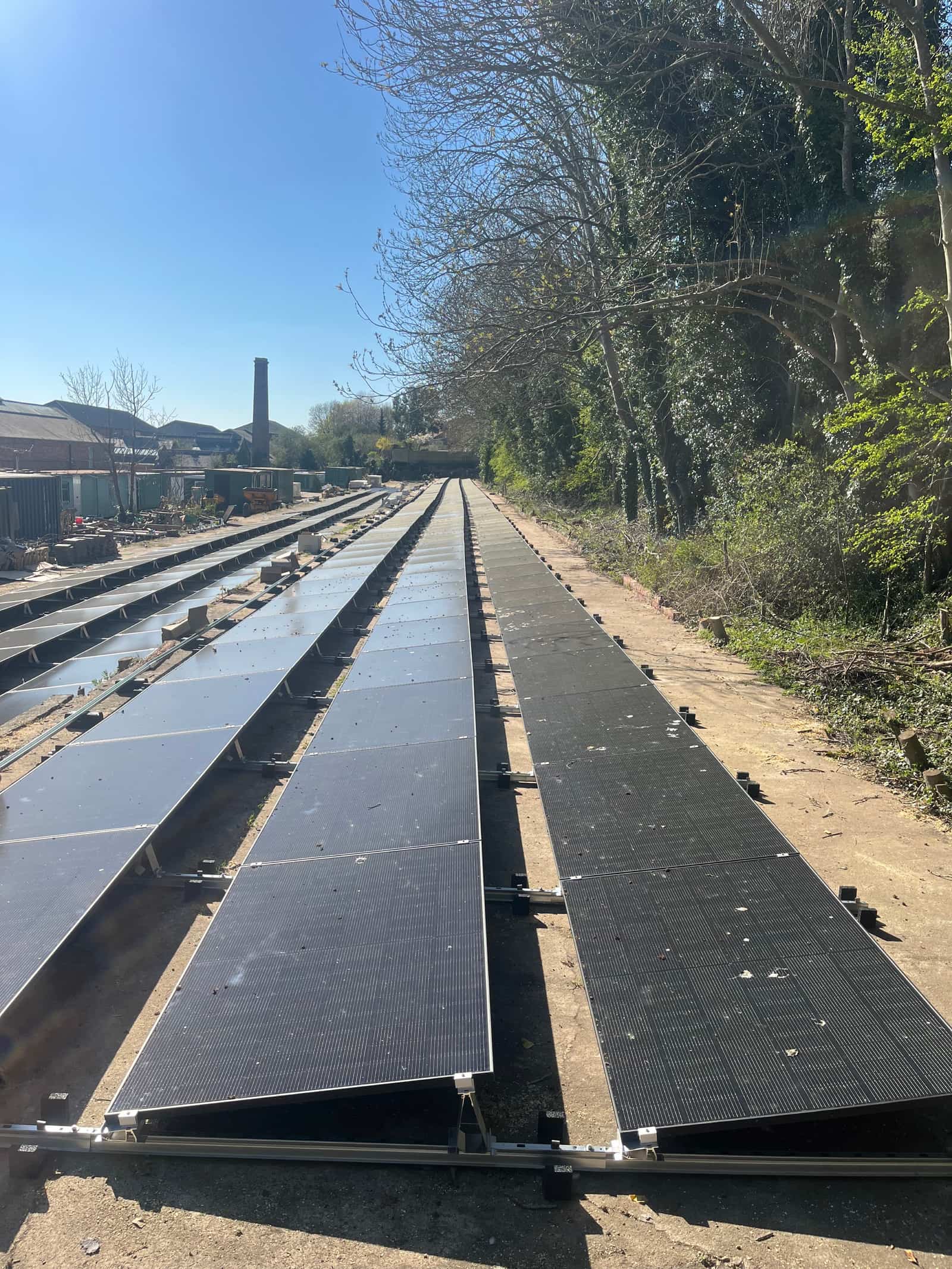
The Old Depot, Northamptonshire
Mounting designed for uneven ground where earthworks were not permitted, plus a tree management programme with zero removals.
Read Case Study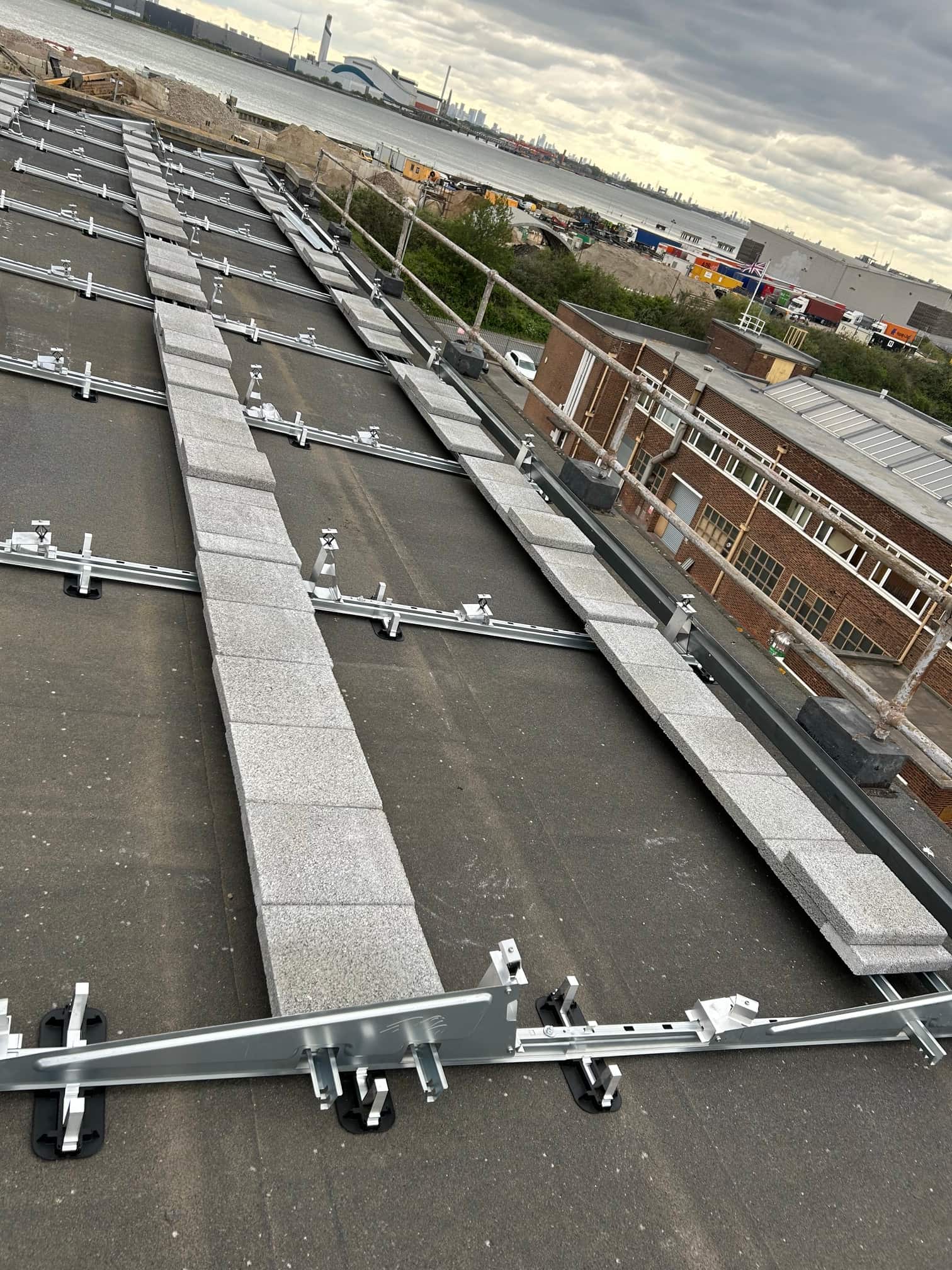
Print & Design Workshop, Rainham
A ballasted, non-penetrating flat-roof mounting system carried by hand to roofs up to 30 metres high with zero business downtime.
Read Case StudySee all our case studies, or read our guide to commercial solar planning permission.
Frequently Asked Questions
It depends on the site, but the civils typically cover site clearance and enabling works, any earthworks or grading, access tracks and hardstanding for plant, the array foundations, reinforced bases for inverters and battery equipment, cable trenching and ducting between the array and the building, the DNO grid-connection civils, and reinstatement afterwards. On a rooftop project the scope is smaller; on a ground-mount it can be the largest part of the job — at Woodhall Manor the enabling works alone ran to six weeks before the array was built.
Yes — that is the whole point of running civils as a service line. The same team designs the energy system and plans the enabling works, so the groundworks are engineered around the array layout, cable routes and connection points from the start rather than handed to a third party who has never seen the design. It means one point of responsibility for the ground and the system, and no gap between the two contractors where projects usually stall.
We survey the ground first with a geotechnical assessment, then choose the foundation the site allows. Driven steel piles suit larger arrays on good cohesive soil; ground or helical screws work where the ground is rocky or prone to refusal; ballasted or concrete systems are used where the ground cannot be penetrated — such as contaminated or made ground — and on flat roofs; and concrete piers handle high point loads. At the Print & Design Workshop in Rainham we used a ballasted, non-penetrating system so the flat roof was never pierced.
Yes — challenging sites are our niche. At The Old Depot, planning ruled out earthworks and levelling, so we designed a mounting system that follows the natural contours of the land and installed 500 panels without significant alteration to the ground. At Woodhall Manor, years of accumulated waste soil, mature trees and redundant buildings had to be cleared before the site was usable at all. Listed buildings, conservation settings, protected trees and uneven ground are design inputs for us, not dead ends.
Cable trenches are dug to at least 600mm to the top of the cable, with segregated DC, AC, comms and earth runs pulled through duct with a draw rope, marker and warning tape laid above, then backfilled and compacted. Reinstatement is part of the job: at Seckford Hall the array sat around 300 metres from the buildings, and every section of turf lifted for the roughly 300m trench across the estate was retained and relaid so there was virtually no visible evidence of the cabling beneath.
Yes — where a site needs enabling works, we carry them out as part of the project rather than leaving them to someone else. At Woodhall Manor the proposed installation area was unusable until our team spent six weeks removing nine conifers over 60 feet tall, clearing overgrown vegetation and hedgerows, taking out waste soil and demolishing redundant storage buildings. Only then did construction of the 172kWp array begin.
Got a Difficult Site? That's the Kind We Specialise In
Overgrown land, uneven ground, long cable runs, listed buildings, trees you can't touch — we've delivered solar projects through all of them. Book a free site survey and we'll tell you honestly what your ground needs before a single panel is ordered.
Book a Free Site Survey for Your Groundworks
Get a free, no-obligation site survey and quotation for your commercial property. Our MCS certified team will assess your building and provide a detailed proposal within 5 working days.
Prefer to speak to someone?
01279 295630